Bilona Ghee vs Regular Ghee: What's the Difference?
Ghee has been an essential part of Indian kitchens and Ayurvedic traditions for centuries. From enhancing the flavor of meals to supporting overall wellness, ghee holds a special place in everyday life. However, not all ghee is made the same.
With growing awareness about traditional foods, many consumers now ask an important question:
What is the difference between Bilona Ghee and regular ghee?
Although both are forms of clarified butter, the way they are prepared, their nutritional profile, taste, aroma, and overall quality can differ significantly. Understanding these differences can help you choose the right ghee for your family's health.
In this article, we'll explore Bilona Ghee and regular ghee in detail, comparing everything from production methods to health benefits.
What is Bilona Ghee?
Bilona Ghee is prepared using the traditional "Bilona" method, a process that has been practiced in India for generations.
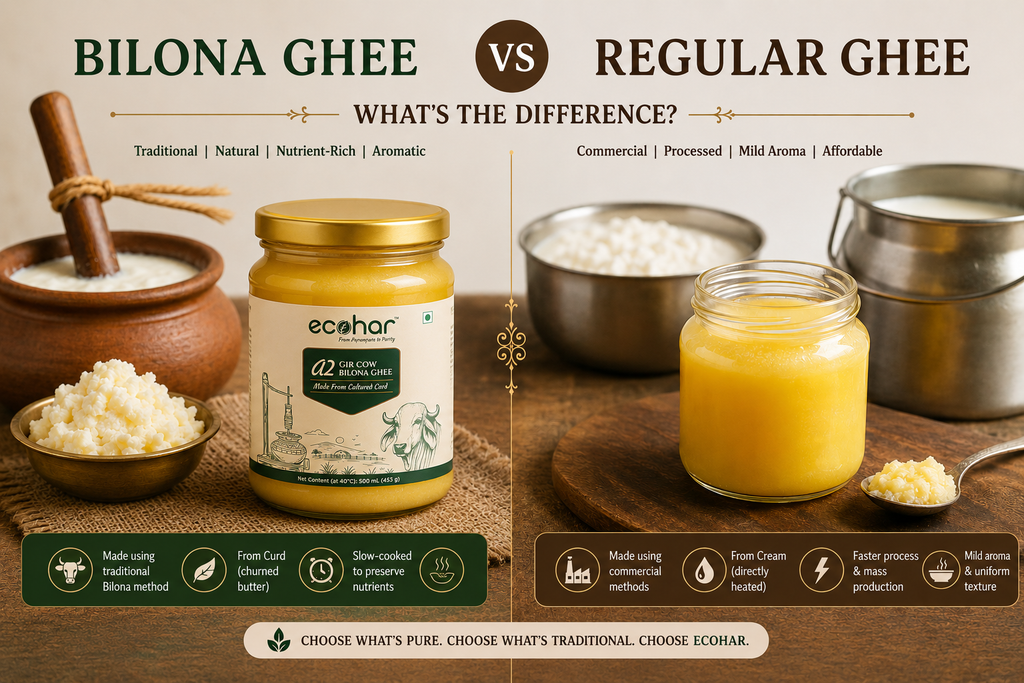
Instead of directly heating cream, Bilona Ghee starts with fresh A2 cow milk. The milk is first converted into curd using natural fermentation. Once the curd is ready, it is churned using a traditional wooden churner (called a Bilona) to separate butter from buttermilk.
The freshly obtained butter is then slowly heated over a low flame until pure golden ghee is formed.
This slow and careful process preserves the natural aroma, texture, and nutritional value of the ghee.
What is Regular Ghee?
Regular ghee is generally produced using a much faster commercial process.
Instead of making curd, manufacturers often separate cream directly from milk. The cream is heated to produce ghee, reducing production time and costs.
Large-scale production focuses on efficiency and higher output, making regular ghee more affordable and widely available.
While regular ghee is still a useful cooking fat, it typically does not undergo the traditional fermentation and churning process that defines authentic Bilona Ghee.
Bilona Ghee vs Regular Ghee: Quick Comparison
| Feature | Bilona Ghee | Regular Ghee |
|---|---|---|
| Preparation Method | Traditional Bilona Process | Direct Cream Heating |
| Raw Material | Milk → Curd → Butter | Cream |
| Churning | Wooden Bilona Churning | Usually No Traditional Churning |
| Production Time | Long and Labor Intensive | Fast |
| Flavor | Rich, Nutty & Aromatic | Mild |
| Texture | Smooth & Granular | Smooth |
| Cost | Premium | Budget Friendly |
| Traditional Process | Yes | Usually No |
The Preparation Process Makes the Biggest Difference
The biggest distinction between Bilona Ghee and regular ghee lies in how they are made.
Bilona Method
The traditional process involves:
-
Fresh cow milk
-
Natural curd formation
-
Wooden churning
-
Separation of butter
-
Slow heating
-
Handcrafted production
Because this method takes more time and uses more milk to produce the same amount of ghee, Bilona Ghee is considered a premium product.
Regular Method
Commercial production generally includes:
-
Cream extraction
-
Direct heating
-
Industrial processing
-
Large batch manufacturing
This approach is efficient and suitable for large-scale production but does not follow the traditional Bilona process.
Taste and Aroma
One of the easiest ways to distinguish Bilona Ghee from regular ghee is by its taste and aroma.
Bilona Ghee develops a naturally rich, nutty fragrance due to slow heating and traditional preparation. It also provides a deeper flavor that enhances Indian dishes such as dal, rotis, khichdi, and sweets.
Regular ghee usually has a milder aroma and more neutral taste, making it suitable for everyday cooking.
Texture and Appearance
Authentic Bilona Ghee often has:
-
A golden-yellow color (which can vary naturally depending on the cows' diet)
-
A rich, creamy texture
-
Slight natural granules
Regular ghee generally appears smoother and more uniform because of commercial processing methods.
Natural variations in color and texture are normal in traditionally prepared ghee.
Nutritional Perspective
Both Bilona Ghee and regular ghee contain healthy fats and fat-soluble vitamins such as Vitamins A, D, E, and K.
Bilona Ghee is valued by many consumers because the traditional fermentation and slow preparation process aligns with long-standing culinary and Ayurvedic practices.
However, it's important to note that the exact nutritional composition depends on several factors, including:
-
The quality of the milk
-
The cows' diet
-
Production methods
-
Storage conditions
No single food should be viewed as a cure or guaranteed health solution.
Cooking Performance
Bilona Ghee has a naturally high smoke point, making it suitable for various cooking methods, including:
-
Frying
-
Sautéing
-
Roasting
-
Tempering (Tadka)
-
Baking
Its rich aroma also enhances traditional Indian recipes.
Which One is Better for Daily Use?
Both types of ghee can be part of a balanced diet.
If you value:
-
Traditional preparation
-
Authentic craftsmanship
-
Rich taste
-
Premium quality
Bilona Ghee may be the preferred choice.
If your priority is affordability for large-volume everyday cooking, regular ghee can also be a practical option.
Ultimately, the right choice depends on your personal preferences, cooking habits, and budget.
Why is Bilona Ghee More Expensive?
Many people wonder why Bilona Ghee costs significantly more than regular ghee.
Several factors contribute to its premium pricing:
1. More Milk Required
Producing Bilona Ghee requires a substantial amount of milk, making it naturally more resource-intensive.
2. Longer Production Time
The process includes fermentation, churning, and slow heating, which takes considerably longer than commercial methods.
3. Skilled Traditional Preparation
The Bilona method requires expertise and careful attention at every stage.
4. Small Batch Production
Many Bilona Ghee producers prepare their ghee in smaller batches to maintain consistency and quality.
How to Identify Authentic Bilona Ghee
Before purchasing Bilona Ghee, look for the following:
✔ Clearly mentions the Bilona Method
✔ Ingredient list contains only cow milk ghee
✔ No artificial flavors or preservatives
✔ Transparent sourcing information
✔ Proper food safety certifications
✔ Trusted brand reputation
Remember, color alone is not a reliable indicator of purity, as it naturally varies with the cows' feed and season.
Frequently Asked Questions
Is Bilona Ghee healthier than regular ghee?
Bilona Ghee is appreciated for its traditional preparation method and rich flavor. Both Bilona and regular ghee contain fats and fat-soluble vitamins. The best choice depends on your dietary needs, preferences, and overall eating pattern.
Why is Bilona Ghee expensive?
It requires more milk, more time, traditional churning, and careful small-batch production.
Can Bilona Ghee be used for cooking?
Yes. Bilona Ghee is suitable for everyday cooking, frying, sautéing, baking, and traditional Indian recipes.
Does Bilona Ghee have a different taste?
Yes. Many people describe Bilona Ghee as richer, nuttier, and more aromatic than regular ghee.
Can children eat Bilona Ghee?
Ghee can be included in a balanced diet for many people, including children, according to individual dietary needs and guidance from healthcare professionals.
Final Thoughts
Both Bilona Ghee and regular ghee have their place in the kitchen. The key difference lies in how they are made.
Bilona Ghee follows a centuries-old traditional process involving curd fermentation, wooden churning, and slow cooking. This method creates a rich flavor, distinctive aroma, and artisanal character that many consumers value.
Regular ghee, produced through faster commercial methods, offers convenience and affordability for everyday cooking.
If you appreciate traditional craftsmanship, authentic preparation, and premium quality, Bilona Ghee is a worthwhile choice.
At ECOHAR, we are committed to bringing you traditionally prepared Bilona Ghee made with care, quality ingredients, and a focus on authenticity—so you can enjoy a product inspired by India's rich culinary heritage.