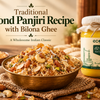
Traditional Gond Panjiri Recipe with Bilona Ghee – A Wholesome Indian Classic
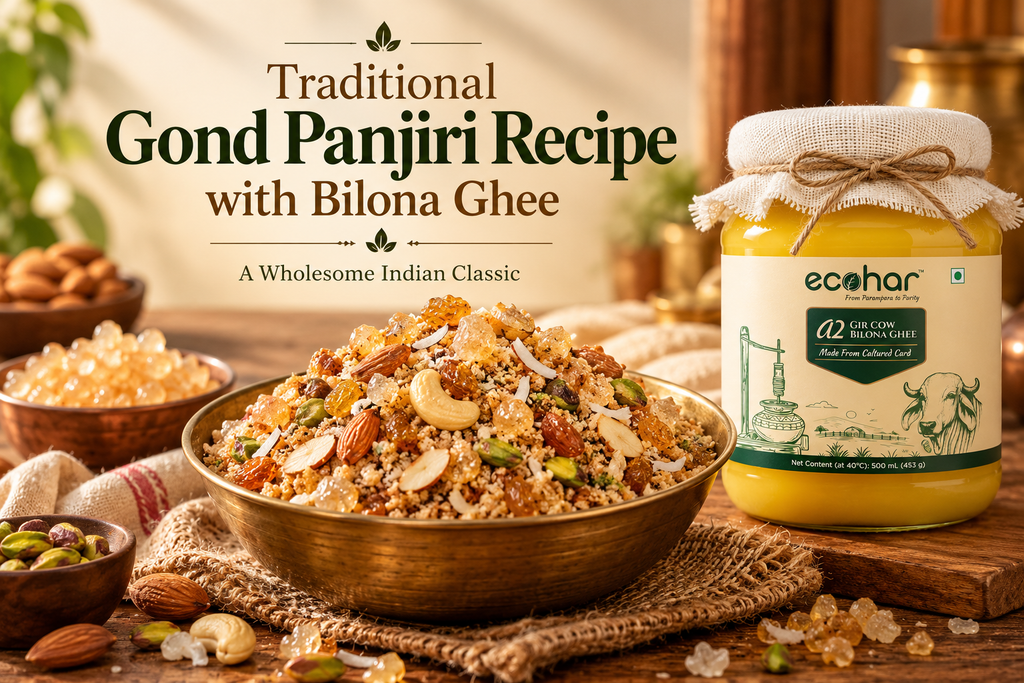
There are some recipes that instantly remind us of home, winter afternoons, and the warmth of traditional Indian kitchens. Gond Panjiri is one of them.
Made with edible gond, whole wheat flour, dry fruits and aromatic ghee, Panjiri has been prepared in Indian households for generations. And when made with A2 Gir Cow Bilona Ghee, its rich aroma and traditional flavour become even more special.
Here’s an easy way to prepare traditional Gond Panjiri at home.
Ingredients
- 1 cup whole wheat flour (atta)
- ½ cup edible gond
- ¾ cup powdered jaggery or powdered sugar, according to taste
- ¾ cup Ecohar A2 Gir Cow Bilona Ghee
- ¼ cup almonds, chopped
- ¼ cup cashews, chopped
- 2 tbsp pistachios, chopped
- 2 tbsp raisins
- 2 tbsp melon seeds
- ½ tsp cardamom powder
- 2 tbsp desiccated coconut – optional
How to Make Gond Panjiri
Step 1: Fry the Gond
Heat a portion of Bilona Ghee in a heavy-bottomed kadai on low-medium heat.
Add the edible gond in small batches. It will puff up quickly. Once properly puffed and crisp, remove it from the kadai and keep it aside.
After it cools, lightly crush the fried gond.
Step 2: Roast the Dry Fruits
In the same kadai, lightly roast the almonds, cashews, pistachios and melon seeds in a little ghee.
Roast only until they become aromatic and slightly golden. Remove and keep aside.
Step 3: Roast the Atta
Add the remaining Ecohar A2 Gir Cow Bilona Ghee to the kadai, followed by the whole wheat flour.
Roast the atta slowly on low heat, stirring continuously.
This step takes patience. Continue roasting until the flour develops a beautiful golden colour and a rich, nutty aroma.
Step 4: Bring Everything Together
Turn off the heat and allow the roasted atta mixture to cool slightly.
Add the crushed gond, roasted dry fruits, raisins, coconut and cardamom powder. Mix everything well.
Once the mixture is warm rather than hot, add powdered jaggery or sugar and combine thoroughly.
Your homemade Gond Panjiri is ready.
Why Bilona Ghee Works Beautifully in Panjiri
Ghee isn't just another ingredient in traditional Panjiri—it contributes significantly to its aroma, texture and flavour.
Ecohar A2 Gir Cow Bilona Ghee is made from curd using the traditional Bilona method. Its rich aroma pairs beautifully with roasted atta, gond and dry fruits, giving this traditional recipe the flavour it deserves.
Tips for Perfect Gond Panjiri
Always roast the atta on a low flame. High heat can brown the flour too quickly without developing the desired roasted flavour.
Fry gond in small batches so that every piece puffs properly. If you're using jaggery, don't add it while the mixture is extremely hot, as excessive heat can affect its texture.
You can also adjust the quantity of dry fruits and sweetness according to your preference.
How to Store Gond Panjiri
Allow the Panjiri to cool completely before transferring it to a clean, airtight container.
Keep it in a cool and dry place, and always use a dry spoon while serving.
A Spoonful of Parampara
Traditional recipes don't always need reinvention. Sometimes, the ingredients and the process are what make them special.
With roasted atta, crunchy gond, dry fruits and the unmistakable aroma of Ecohar A2 Gir Cow Bilona Ghee, this Gond Panjiri brings a little bit of Indian parampara back to your kitchen.
From Parampara to Purity.
Frequently Asked Questions
What is Gond Panjiri made from?
Traditional Gond Panjiri is commonly prepared using edible gond, whole wheat flour, ghee, dry fruits and a sweetener such as jaggery or sugar.
Can I make Gond Panjiri with jaggery?
Yes. Powdered jaggery can be used instead of refined sugar. Add it after the roasted mixture has cooled slightly.
Why is ghee important in Panjiri?
Ghee helps roast the flour and other ingredients while contributing to the characteristic aroma, richness and texture of Panjiri.
Can Gond Panjiri be eaten throughout the year?
It can be enjoyed at any time, although it is particularly popular during the cooler months because of its rich ingredients.